Learning Library

Explore evidence-based Sensorimotor Psychotherapy articles, case studies, and tools for your clinical practice.
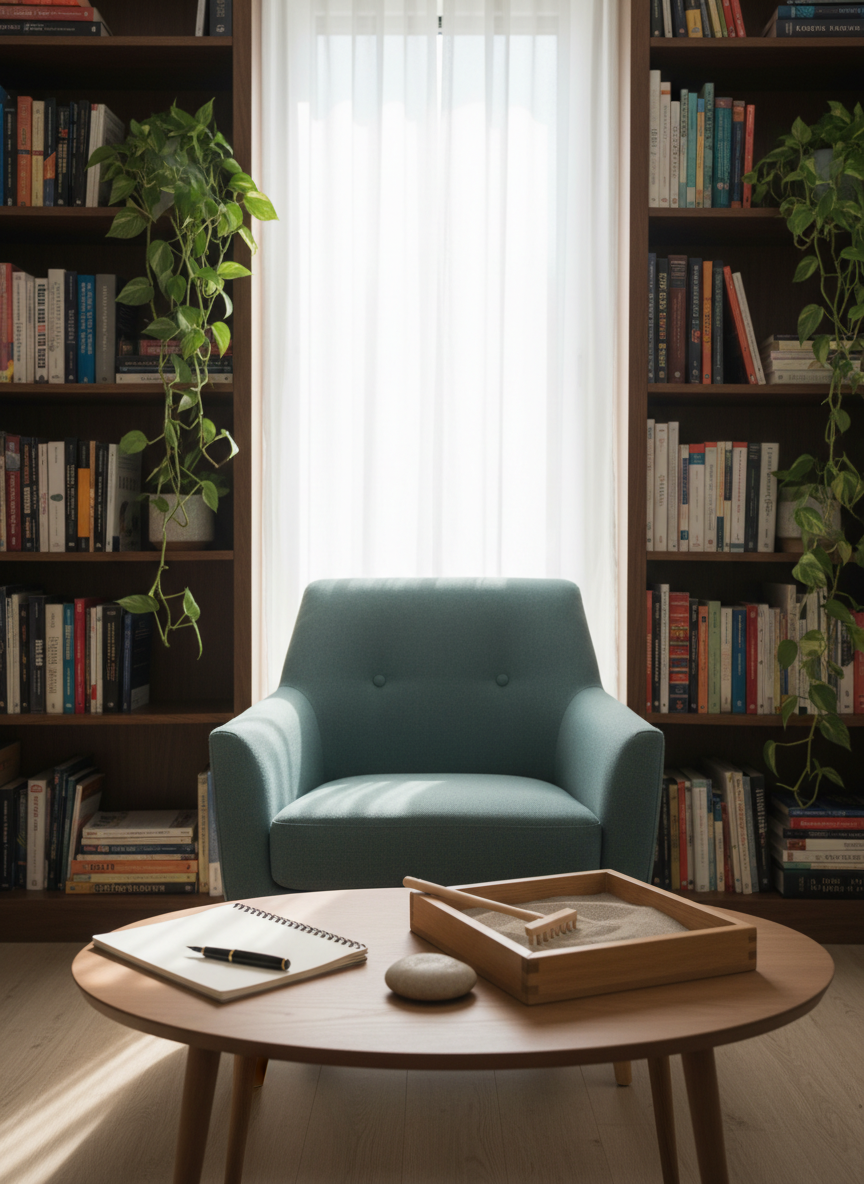
A neatly arranged therapy consultation space without any people, featuring a modern upholstered armchair facing a low wooden coffee table. On the table rests an open notebook, a weighted sand tray, and a smooth river stone, symbolizing grounding. Behind, tall bookshelves display neatly organized psychology and neuroscience books alongside a few green plants. Soft morning daylight filters through a large window with sheer white curtains, casting diffused light and gentle shadows across the room. Photographic realism with a calm, professional atmosphere, composed at eye level with moderate depth of field so the foreground objects are in sharp focus and the background slightly softened, conveying a sense of safety, clarity, and evidence-based practice.

Articles

A close-up of a therapist’s workstation with no people present: a sleek wooden desk holds a laptop displaying a neuroscience brain diagram, a spiral-bound training manual labeled “Sensorimotor Psychotherapy Fundamentals,” color-coded sticky notes, and a pair of noise-canceling headphones resting neatly to one side. A small tactile object, like a textured stress ball, sits beside the manual. The space is lit by soft, indirect daylight from an unseen window and a warm desk lamp, creating gentle highlights on the laptop and manual. Shot from a slightly elevated angle in photographic realism, with shallow depth of field that keeps the manual and tactile object in sharp focus while the background office shelves blur, suggesting focused online learning and professional development.
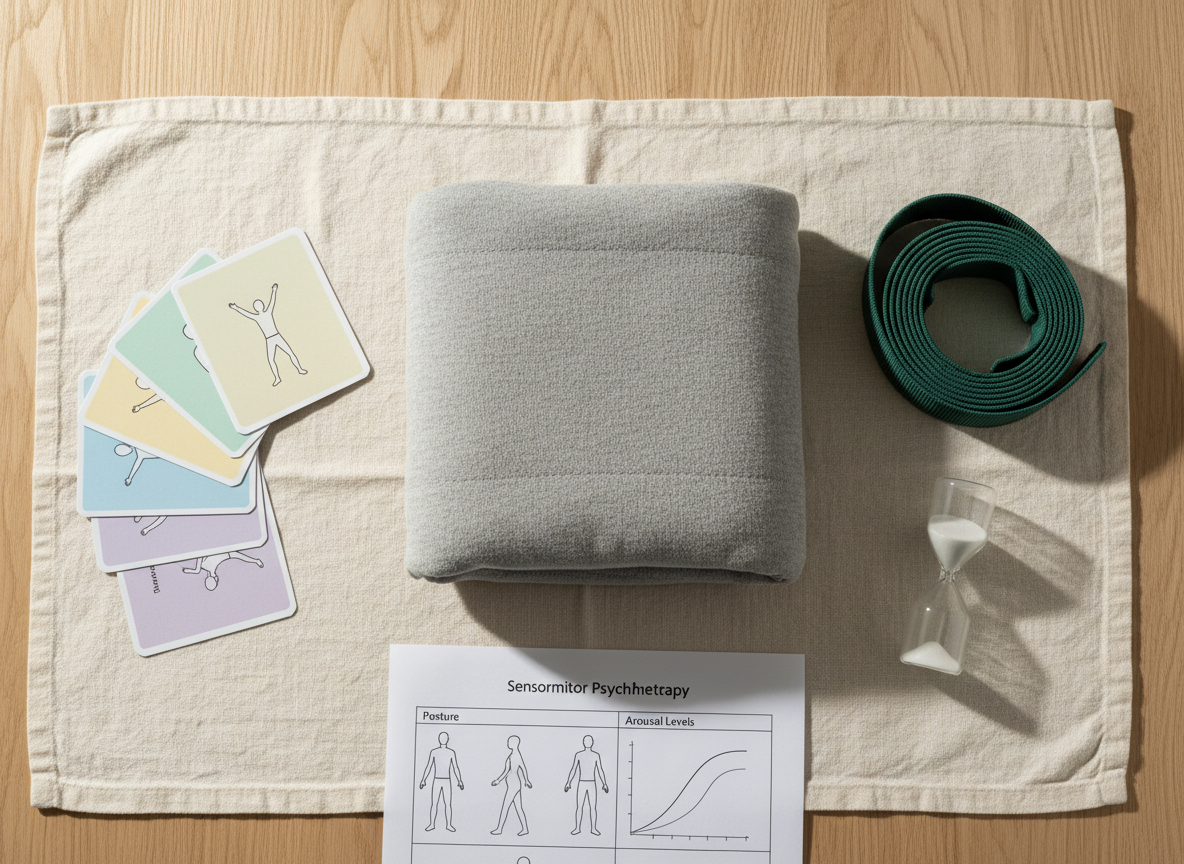
A detailed close-up of somatic therapy tools arranged on a neutral linen cloth atop a light oak table: a weighted lap pad with soft gray fabric, a coiled textured therapy band, a small hourglass timer, and a set of colored cards illustrating body-based regulation techniques. Nearby lies a printed Sensorimotor Psychotherapy worksheet with tidy diagrams of posture and arousal levels. Soft studio lighting from the side creates subtle shadows and gentle highlights on each object’s surface, emphasizing textures and materials. Photographic realism with a centered, overhead composition and sharp focus throughout, conveying a precise, evidence-based, and tactile approach to psychotherapy training and practice.
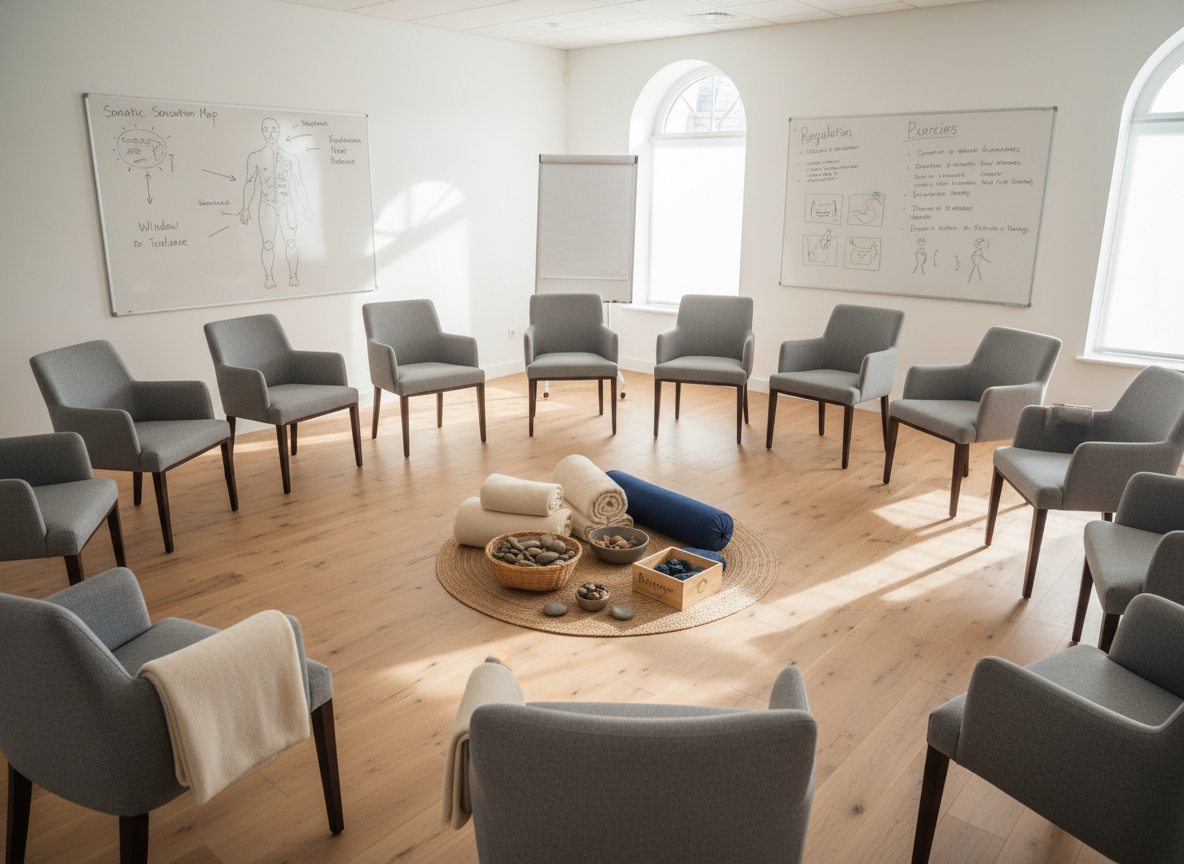
An inviting training room set up for a somatic psychotherapy workshop, completely empty of people. Padded chairs form a loose circle around a central arrangement of grounding objects: folded blankets, yoga bolsters, a basket of smooth stones, and a small wooden box labeled “Resources.” Along the walls, large whiteboards show hand-drawn body diagrams and regulation exercises. Natural afternoon light pours in through high windows, creating a warm, balanced illumination with soft shadows under the chairs. Photographic realism at a wide angle captures the entire room, emphasizing open space and clear pathways. The mood is calm, organized, and professional, communicating readiness for experiential learning in a safe, embodied environment.

Newsletter

Get new trainings and resources by email.